Custom ERP, built around how you run.
Helmsman builds custom ERP software for companies that have outgrown their spreadsheets, or a product that almost fits them. Operations, inventory, purchase, sales and accounts work from one record, shaped around your own workflows, approvals and reports, so a number entered once is the number everyone sees.
From $3,000Typically $3,000 to $80,000See pricing
Last updated
Who needs custom ERP software?
You probably need it if…
- The same order is typed again by sales, by accounts and by stores.
- Stock in the system and stock on the shelf rarely agree.
- Month-end starts with reconciling spreadsheets before anyone trusts the numbers.
- Your current software makes the team work around it, instead of the other way round.
- Management sees last month's report when it needs today's position.
What does custom ERP software include?
- 01
Operations & inventory
Stock that matches the shelf
Receipts, issues, transfers and adjustments recorded where they happen, so stock is known by item, batch and location at any moment.
- 02
Purchase & vendors
From requisition to payment
Requisitions, purchase orders, goods received and vendor bills linked to each other, so what was ordered, received and paid is never a matter of opinion.
- 03
Sales & billing
Quotation to invoice, without re-typing
Quotations become orders, orders become dispatches and invoices, and every step carries the same customer, item and price forward.
- 04
Finance & accounting
Books that fill themselves
Receivables, payables and costing posted from the operations behind them, so accounts close on figures that were entered once.
- 05
Approvals & workflow
Your rules, enforced by the system
Approvals, escalations and alerts that follow how your company decides things, so work moves without someone chasing it.
- 06
Reports & dashboards
Today's numbers, not last month's
Management dashboards on live data, so every department reads the same figure on the same day.
- 07
Integrations
The tools you keep, connected
Connections to the software you already run, so information moves between systems instead of between people.
How does Helmsman deliver custom ERP software?
The full approachEvery ERP project starts with your teams, not with a product demo. Helmsman sits with the people who will use the system, maps how orders, stock and money actually move through the business, and agrees in writing what the system has to fix before any screen is designed.
The system is then designed around those roles and built in stages, with working software you can review as it comes together. Data is migrated and the system goes live department by department. After go-live it keeps evolving: adding a plant, a branch or a product line is usually a change in settings, not a rebuild.
- 01UnderstandProcess map
- 02AnalyseRequirement document
- 03ArchitectSolution structure
- 04DesignScreens and flows
- 05DevelopWorking software
- 06ImplementLive system
- 07EvolveOngoing support
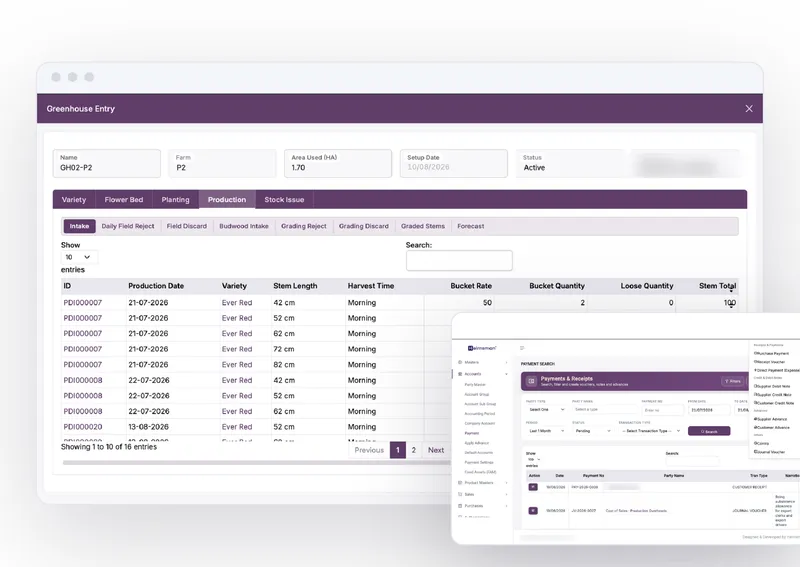
One ERP, from the greenhouse to the ledger
A flower farm in East Africa: production, grading, inventory, sales, accounts and HRMS in a single system.
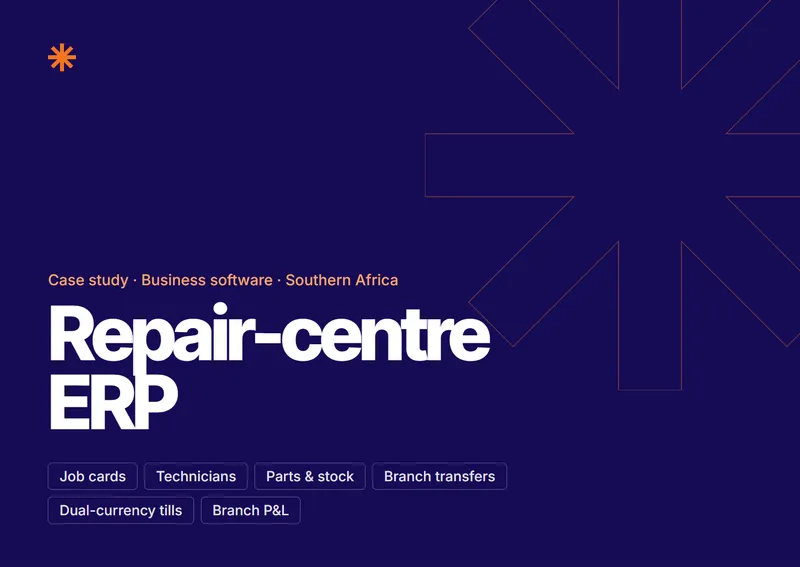
Every repair, from counter to collection
A mobile-repair chain in Southern Africa: job cards, technicians, parts, branches and accounts in one ERP.
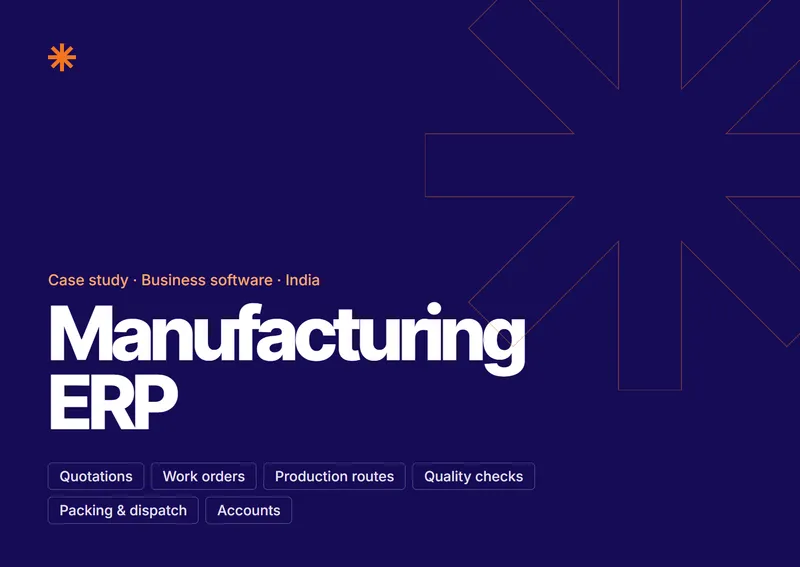
From quotation to dispatch, on one record
An industrial filter manufacturer in India: sales, production routes, stores, dispatch and accounts in one ERP, replacing an older system.
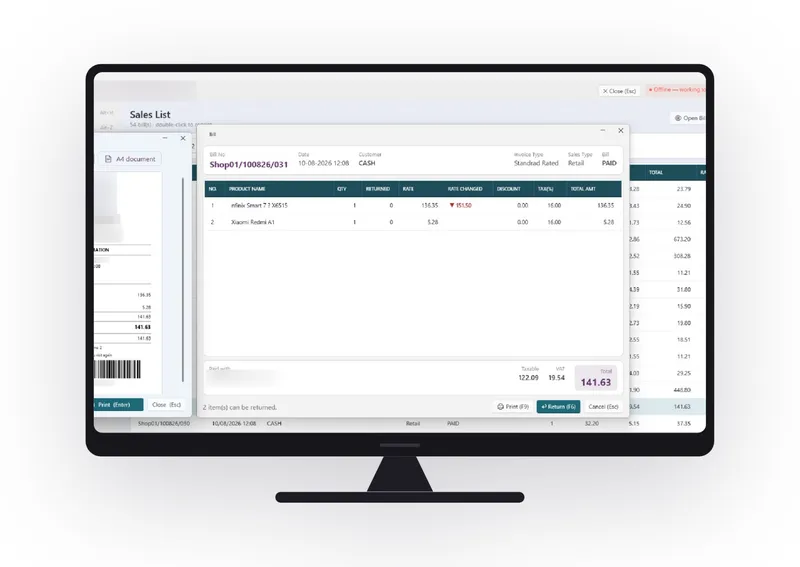
Retail billing, and the numbers behind it
A multi-store electronics retailer in the UAE, with a point of sale built to run the counter and answer head office.
Industries we build this for
Read before you decide
- Moving from Tally to a custom ERP: a step-by-step guide
- Custom ERP or ready-made software: how to decide
- When should a business stop running on Excel?
- How a custom software project runs, stage by stage
- Custom ERP or Tally? A straight comparison
- Custom ERP or Zoho? A straight comparison
- Custom ERP or Odoo? A straight comparison
- Custom ERP or SAP Business One? A straight comparison
- Custom ERP or NetSuite? A straight comparison
- Custom ERP or QuickBooks? A straight comparison
- Your ERP, your code: what you own
ERP questions, answered.
What is custom ERP software?
An ERP (enterprise resource planning) system is the software a company runs its operations, inventory, purchase, sales and accounts on. A custom ERP is built around your own processes, approvals and reports, instead of asking your team to change how it works to fit a ready-made product.
Is a custom ERP better than a ready-made product?
Not always. A ready-made product is often right for standard processes. A custom ERP pays off when the way your business works is part of what makes it competitive, or when the product you use forces workarounds and re-typing.
Can the ERP connect to our accounting software and other tools?
Usually yes, if the other software has a way in, such as an API or a data export. System integration is part of every enterprise project, so the tools you keep are connected and an order entered once reaches invoicing, stock and the management dashboard on its own.
How do we move our existing data into the new ERP?
Data migration is part of the Implement stage. Master data and open balances are moved from old systems and spreadsheets, and full history too when you want it; otherwise it stays readable in the old system. Users are trained, and the system goes live department by department.
Will the ERP grow with our business?
Yes. The architecture is planned so that adding a plant, a branch, a product line or many more users is usually a change in settings, not a rebuild.